The King on the Cross

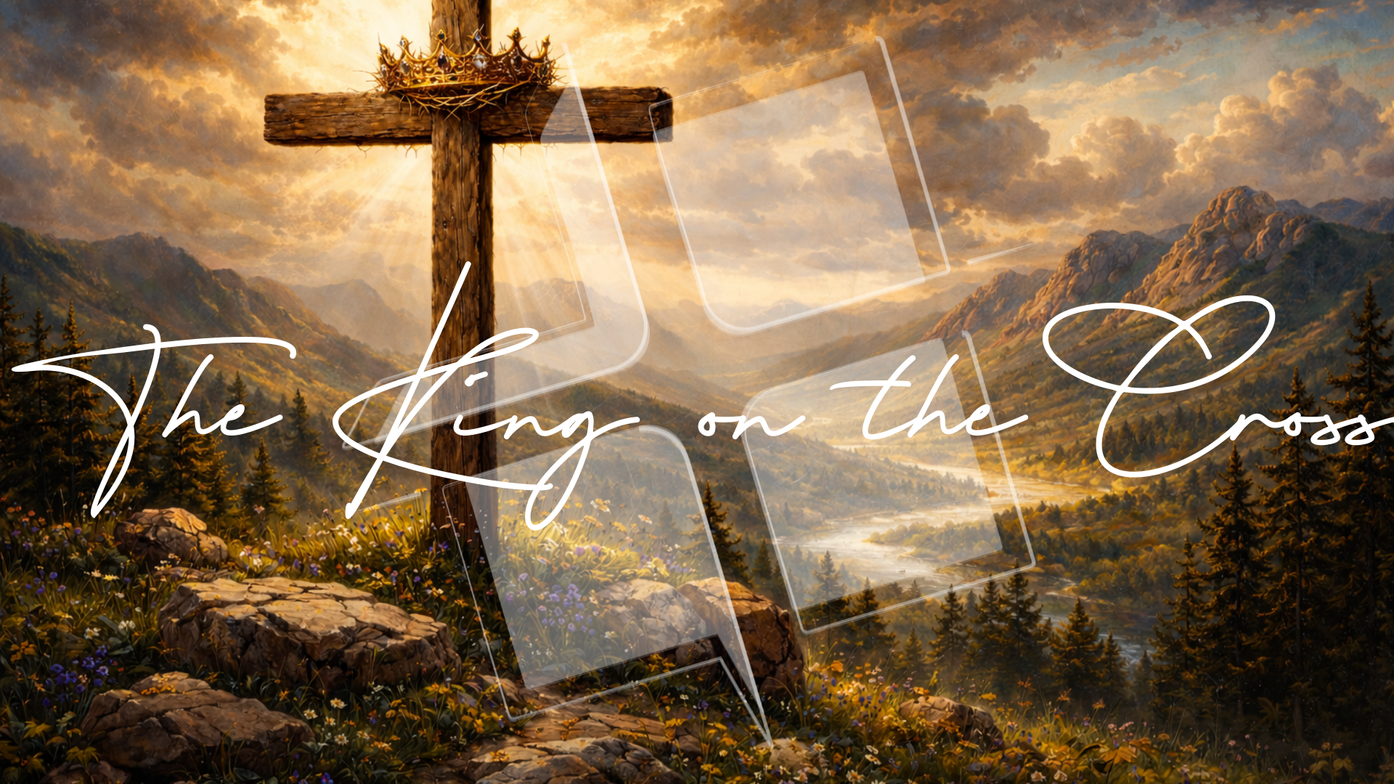
Imagine standing along the dusty road that leads outside Jerusalem.
The air is tense. Crowds are gathering. Roman soldiers move with cold efficiency. This
is not unusual. Crucifixions happen here. The empire ensures people see them.
Then you see Jesus.
His back is torn open from flogging. Blood stains His shoulders. Across those wounded
shoulders rests the heavy wooden beam of a Roman cross. The soldiers force Him
forward through the streets.
Some people mock.
Some stare.
Some weep.
But what most of them do not realize is that the man struggling beneath that cross is not
merely a condemned criminal. He is the King of Kings.
Step closer to Golgotha and watch what happens.
They throw Him onto the wood. Iron spikes pierce His hands and feet. The cross is lifted
upright and slams into the ground. Then the slow agony begins.
To breathe, He must push upward against the nails.
To rest, His body collapses again.
Breath after breath. Wave after wave of pain.
Interestingly, historians and physicians often note that crucifixion shares a striking
similarity with labor pains.
Labor comes in waves — contractions that intensify as life is about to be born.
Crucifixion also came in waves — each breath requiring the victim to lift himself up
against the nails.
In childbirth there is blood and water, cries of agony, a body straining with everything it
has… and then finally the cry that signals life has come into the world.
At the cross something even greater was happening. Jesus strained with every breath.
Blood and water would soon flow from His pierced side.
And when the final moment came, Jesus cried out: “It is finished.”
At that moment the labor of redemption was complete.
Sin was judged.
Justice was satisfied.
Mercy was released.
Life was born for sinners. But the cross was not only the place where Jesus suffered. It
is also the path He calls His followers to walk.
Jesus said: “If anyone would come after Me, let him deny himself and take up his cross
daily and follow Me.” (Luke 9:23)
Following Christ means surrendering our own will for His. It means denying the flesh.
Walking in His Word. Trusting His ways.
Sometimes that road includes sacrifice. Sometimes it includes accusations, rejection, or
humiliation for standing with Christ.
But Scripture tells us something surprising. Suffering with Christ is not a curse. It is a
privilege. “For it has been granted to you that for the sake of Christ you should not only
believe in Him but also suffer for His sake.” (Philippians 1:29)
Because through suffering, God often brings life.
Just as labor pain leads to new birth… and the cross led to resurrection.
And in every moment along that road, we remember this truth: “The joy of the Lord is
your strength.” (Nehemiah 8:10)
The King who deserved a crown of glory carried a cross of suffering. And because He
did…we can receive the crown of life.